They want a simple, effective full-body plan that fits into a busy life and builds strength, mobility, and confidence without overcomplication. You can start seeing meaningful progress by following a balanced, three-day-per-week full-body routine that focuses on compound lifts, movement quality, and gradual progression.
This article explains the fundamentals behind that approach, shows the key components to include, and outlines a beginner-friendly progression you can follow. Expect clear exercises, practical tips for form and recovery, and a straightforward plan to get you moving toward consistent gains.
Fundamentals of a Full Body Workout Plan for Beginners
A beginner full-body plan should prioritize compound movements, consistent progression, and minimal equipment to build strength and movement patterns. Exercises can be scaled from bodyweight to dumbbells or machines and arranged to balance push, pull, and lower-body work in each session.
Benefits of Full Body Workouts
Full body workouts train major muscle groups—chest, back, legs, shoulders, and core—in one session, improving overall strength faster than isolating one muscle per day. They increase training frequency for each muscle (often 2–3 times weekly), which helps beginners learn lifts and progress weight or reps more quickly.
This approach burns more calories per session than single-muscle routines because multiple large muscles work together. It also simplifies scheduling: three full-body workouts per week provide ample recovery while fitting into busy lives. For beginners, full-body plans reduce complexity and lower the risk of overtraining by avoiding excessive volume on any single joint.
Essential Equipment for Home and Gym
For home workouts, a combination of bodyweight exercises and a single pair of adjustable dumbbells covers most needs. Recommended items: adjustable dumbbells (10–50+ lb), a flat/incline bench, resistance bands, and a sturdy pull-up bar or door-frame row strap. These tools enable pressing, rowing, squatting, hinging, and core work.
In a gym, machines add safety and consistent resistance for beginners learning form. Useful machines: leg press, cable row, lat pulldown, chest press, and selectorized leg curl. Machines complement free weights by isolating weak links and letting novices focus on movement patterns before loading heavy with dumbbells or barbells.
Beginners should prioritize versatility and safety when choosing equipment. Start with bodyweight and light dumbbells, then add bands or machines to address weaknesses or prevent form breakdown as weights increase.
Structuring Your Beginner Workout Routine
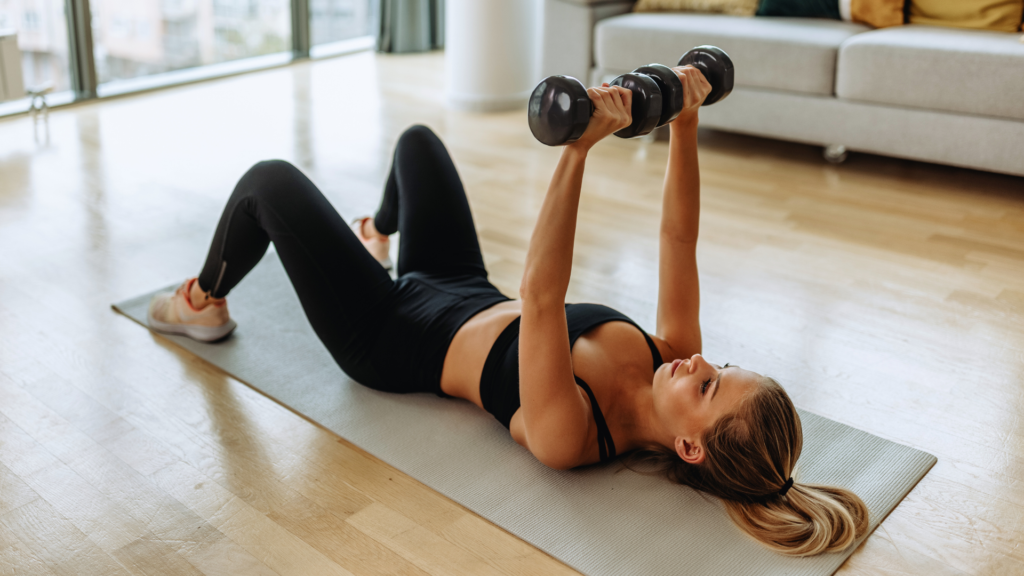
A simple structure: 3 sessions per week (e.g., Monday/Wednesday/Friday), each including warm-up, 4–6 main exercises, and brief cool-down. Warm-up: 5–10 minutes of light cardio and dynamic mobility (hip hinges, shoulder circles). Main exercises should include one lower-body push (squat), one hip hinge (Romanian deadlift or kettlebell swing), one horizontal push (push-up or dumbbell bench), one horizontal pull (dumbbell row), one vertical pull or assistance (band-assisted pull-up or lat pulldown), and core work.
Set and rep recommendations: 3 sets of 8–12 reps for compound moves, 2–3 sets of 12–15 for accessory or machine exercises. Progress by increasing weight, reps, or adding a set every 2–4 weeks. Rest 60–90 seconds between sets for strength-endurance balance. Track workouts in a simple log to ensure steady progression and to spot plateaus early.
Beginner Full Body Workout Plan: Key Components & Progression
This section breaks down which exercises to prioritize, how to perform them with correct technique, how to progress load and volume, and how to protect joints with mobility and recovery strategies.
Core Exercises and Proper Technique
He should focus on compound movements that train multiple muscle groups: back squat, lat pulldown, push-ups (and incline push-ups as a regression), glute bridge, and calf raises. These deliver the most transfer to daily activities and efficiency for a full-body workout routine.
Technique priorities: keep the spine neutral during back squat and glute bridge, drive knees in line with toes, retract scapula during lat pulldown, and maintain a straight plank line on push-ups. Use controlled tempo—2 seconds concentric, 1 second pause, 2–3 seconds eccentric—until form is consistent. For calisthenics workout variants, tuck the pelvis and avoid hip sag on push-ups. Bird dog and plank variations serve as core exercises to stabilize the spine and reinforce proper movement patterns.
One should record their form on video or ask a coach for feedback. Start with bodyweight or light loads until movement quality is perfect, then add resistance to reduce injury risk while preparing for progressive overload.
Sample Full Body Workout Routine for Beginners
A simple three-day-per-week plan balances volume and recovery: perform A/B alternating sessions on nonconsecutive days (e.g., Mon/Wed/Fri).
Workout A
- Back squat: 3 sets x 6–8 reps
- Lat pulldown: 3 x 8–10
- Push-ups (or incline push-ups): 3 x 6–10
- Glute bridge: 3 x 10–12
- Calf raises: 3 x 12–15
- Bird dog: 2 x 8 each side
Workout B
- Romanian deadlift or kettlebell hinge: 3 x 6–8
- Dumbbell row or single-arm lat work: 3 x 8–10
- Overhead press (or pike push-up progression): 3 x 6–8
- Split squat or reverse lunge: 3 x 8 each leg
- Core plank: 3 x 20–45 seconds
Rest 60–90 seconds between sets. He should increase the load when he can complete the top of the rep range with solid form for two workouts in a row.
Building Muscle and Ensuring Progress
He must apply progressive overload to build muscle: increase weight, add reps, shorten rest, or increase tempo once form stays clean. Aim for 6–12 reps for most compound lifts to stimulate hypertrophy, and 8–15 for accessory and calf work.
Track sets, reps, and load in a training log. If recovery lags, reduce volume before cutting intensity. Use a 4–6 week mesocycle: 3–4 weeks of increasing volume or load followed by a deload week (reduced sets or lighter loads). For calisthenics workout progression, convert incline push-ups to regular push-ups, then to weighted or deficit variations over months.
Nutrition and sleep matter: consume a modest calorie surplus with 1.6–2.2 g/kg protein and prioritize 7–9 hours of sleep to support muscle growth and strength gains.
Mobility, Recovery, and Injury Prevention
He should perform dynamic mobility exercises before workouts and short mobility sessions 2–3 times weekly: hip CARs, thoracic rotations, ankle dorsiflexion drills, and shoulder band pull-aparts. These support depth in back squat and safe overhead or pressing movements.
Recovery tools: foam rolling, soft-tissue work, and 10–15 minute active recovery on off days promote blood flow without taxing the nervous system. Monitor joint pain versus muscle soreness; persistent sharp pain warrants rest and professional assessment. Gradual progression of load and consistent technique reduces injury risk more than any single warm-up.
Include prehab movements like face pulls, banded external rotations, and single-leg balance work to protect shoulders and knees. He should prioritize consistency and small weekly increases rather than sudden jumps in volume or weight.